Designing a chatbot that guides small businesses, instead of losing them to competitors
Role
Product Designer, UX Researcher, Character Design & Illustration
Timeline
Aug 24 -Dec 24
Partner
Salesforce
Tools
Figma, FigJam, Procreate, ChatGPT (Simulation Research)
TL;DR
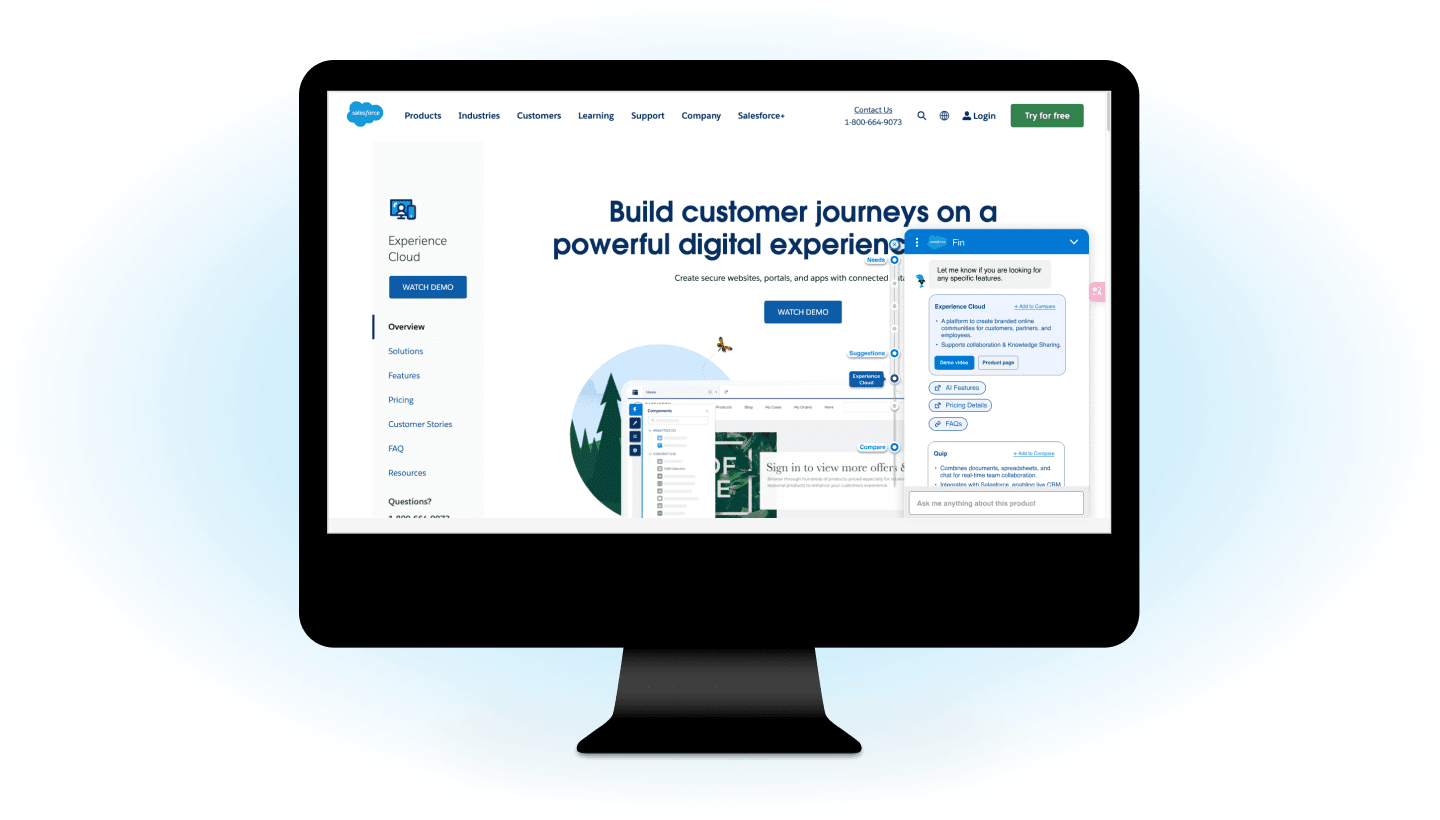
Salesforce's chatbot was pushing first-time small business users toward sales agents before they even understood the product- costing real conversions. I was part of a graduate team that redesigned the experience from the ground up: a research-backed chatbot persona (Fin), behavioral triggers that help without intruding, in-chat product comparison, and a conversation timeline for navigation. Every decision was driven by one principle- build trust through restraint, not features.
The problem
A small business owner lands on Salesforce.com. Overwhelmed by products and jargon, she clicks the chatbot. It gives a generic reply and tells her to call sales. She closes the tab and calls a competitor.
Key issues
No context retention
Premature sales handoffs
Robotic tone
No way to compare products without talking to a human first
Note
At this point, Salesforce's Einstein was not an AI chatbot.
Research
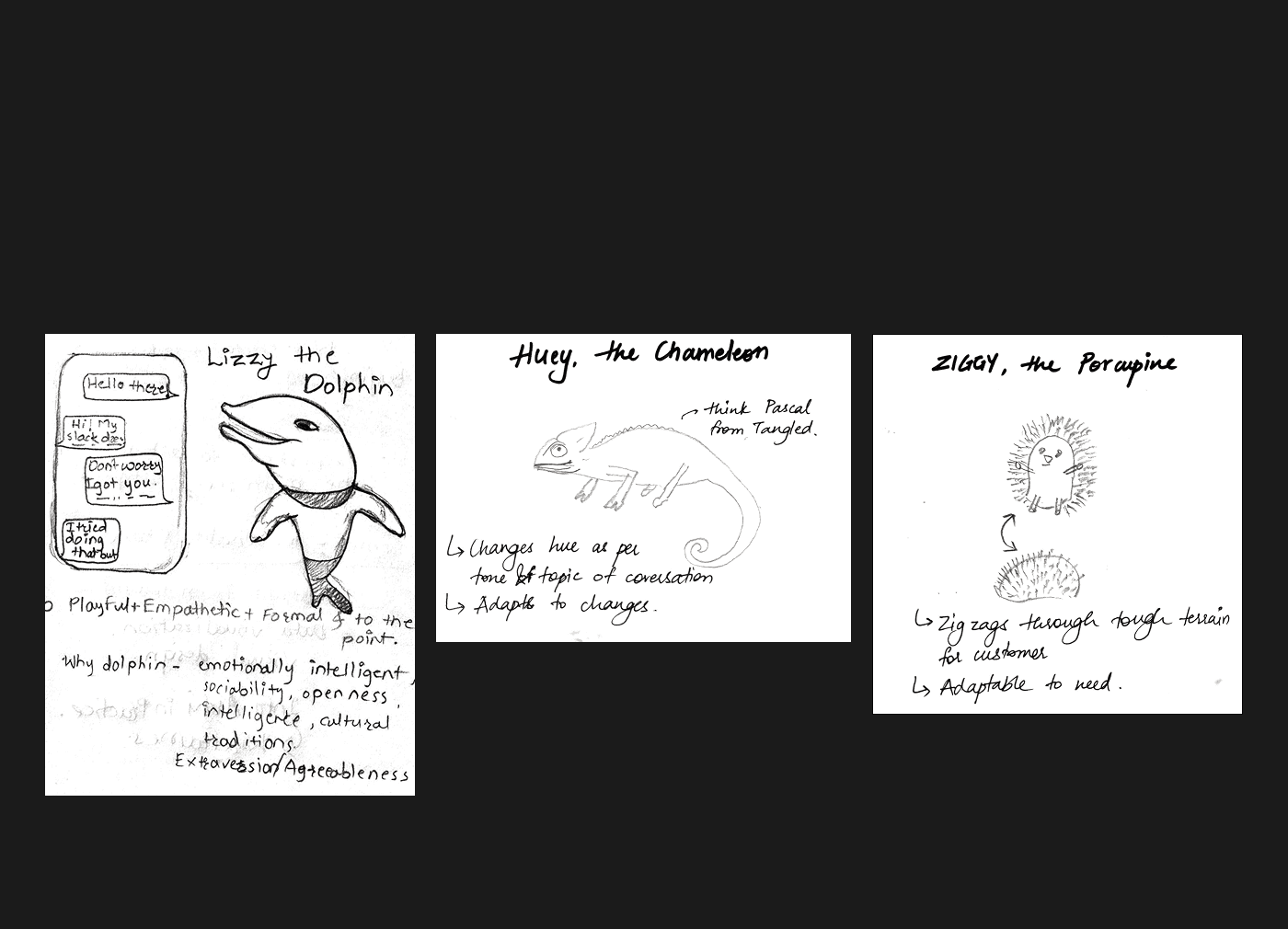
Two parallel tracks — personality & tone (18+ participants, 3 simulated chatbot archetypes) and context awareness (5 contextual inquiries across Salesforce, Amazon Rufus, and ChatGPT).
The finding that drove everything: Users didn't need a smarter bot. They needed one that made them feel competent — not helpless.
Specific signals: users abandoned when asked for contact info upfront, gave up after rephrasing questions three times with no help, and couldn't navigate long chat histories to recall product details.
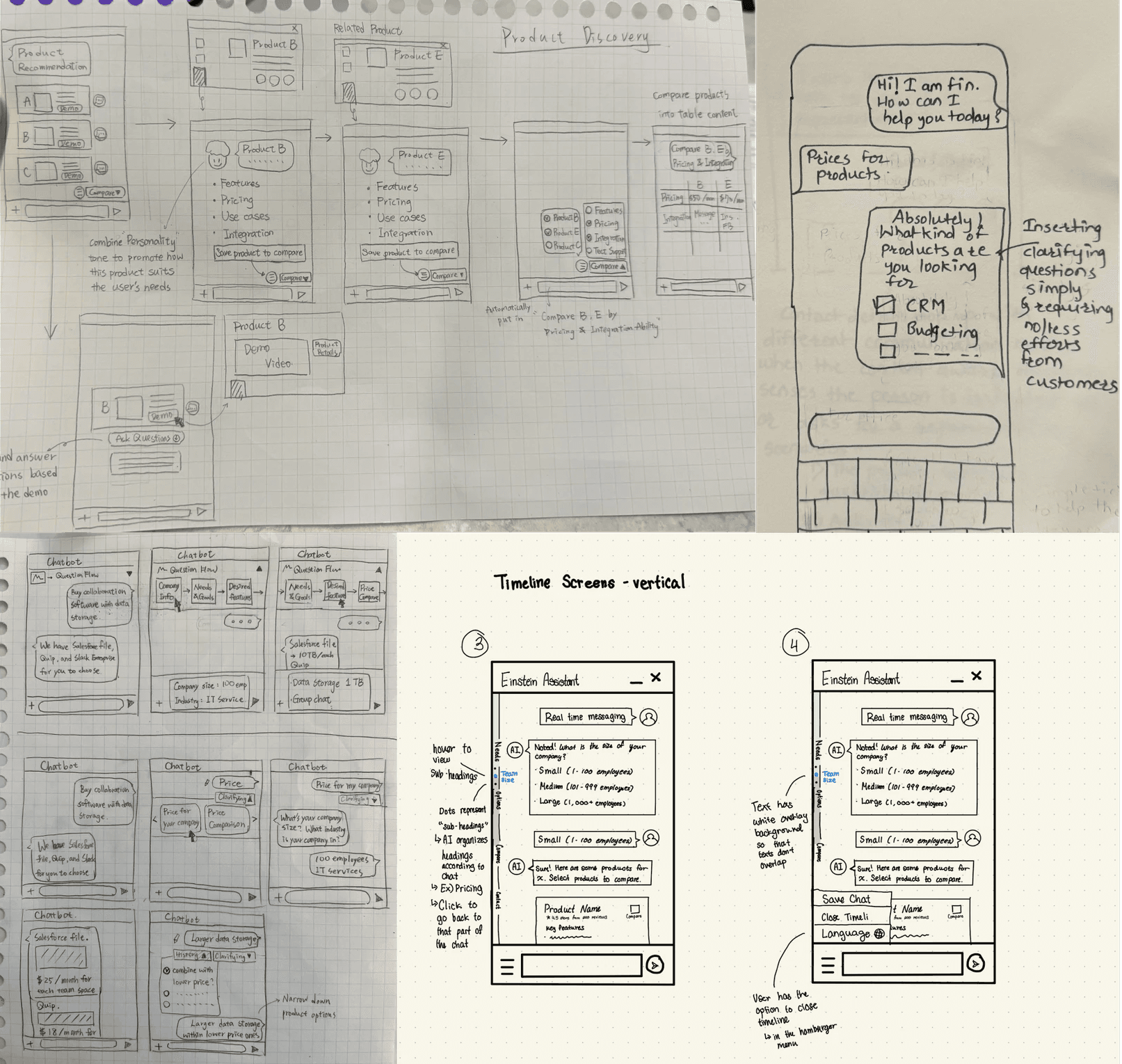
Ideation
We came back and brainstormed together based on our gathered research insights.
Final design
Personality and tone
Goals for designing the personality of the chatbot?
Improving user engagement with the chatbot through language and tone
Increasing user retention
Designing a seamless bot to human(Sales-rep) transition
Representative of Salesforce AI Chatbot
We designed them to be-
Curious
Engaging
Result oriented
Initiator
Encouraging

Product comparison cards and timeline
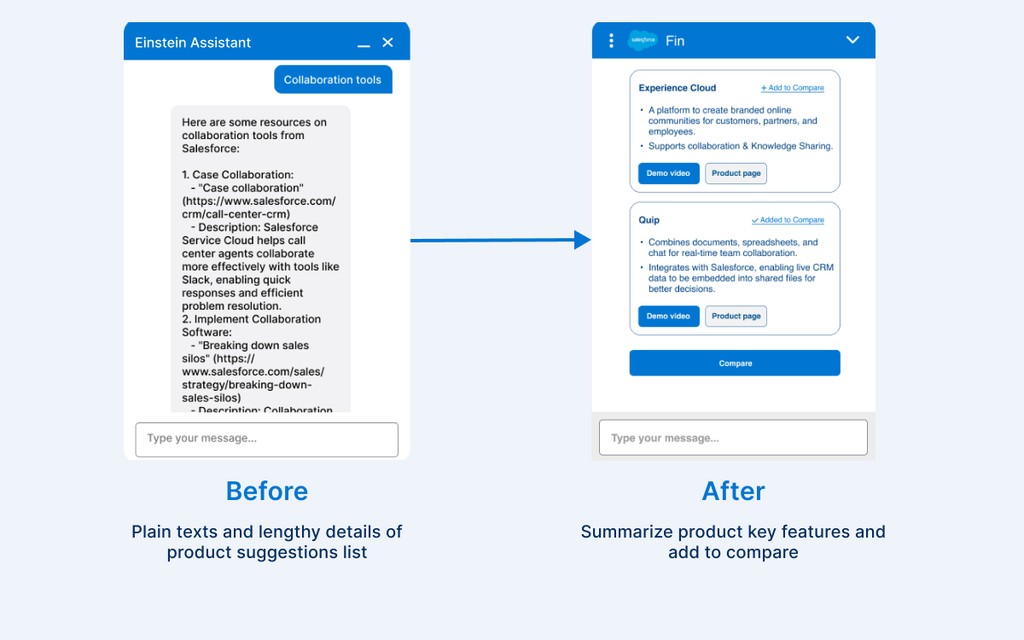
The existing chatbot sent comparison requests straight to sales. We built filterable side-by-side product cards with a downloadable summary so users could decide for themselves whether they needed a human.
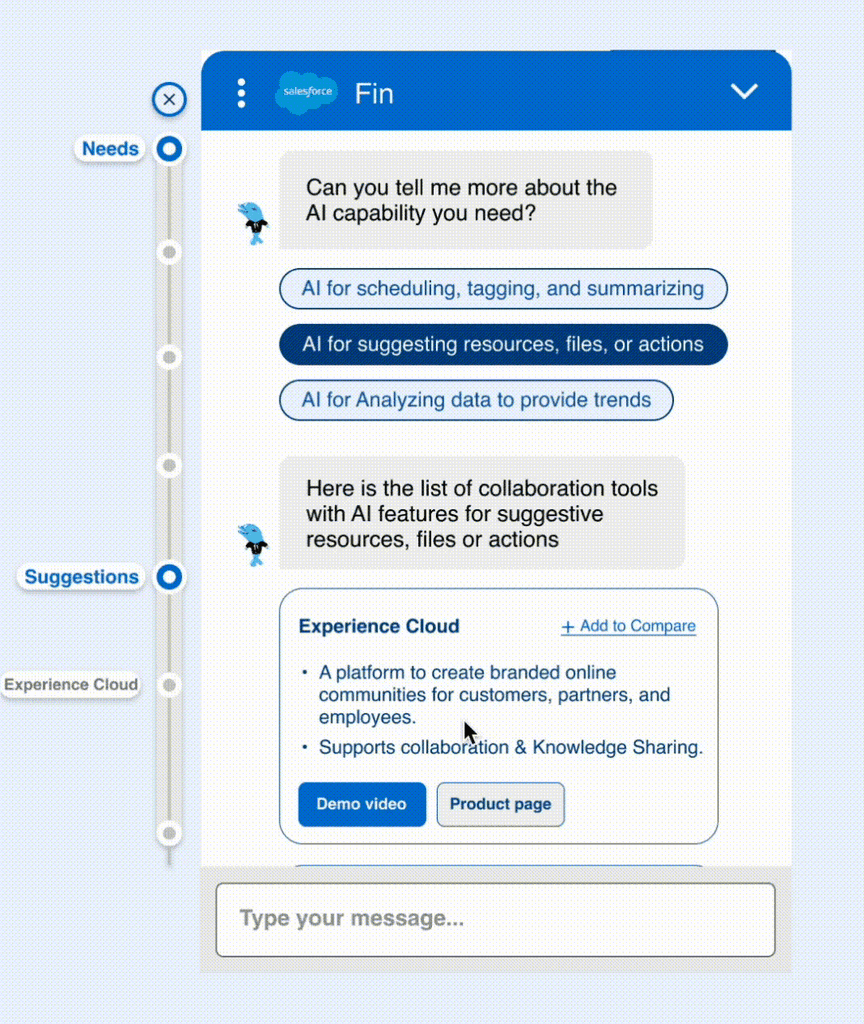
Users scrolled endlessly to recover context. A vertical timeline sidebar auto-generates clickable section headings as the conversation evolves, turning a linear chat into a navigable document.
Key insights that informed design decisions
Users expect the chatbot to simplify product discovery by providing quick information to help them decide whether to explore further.
Users expect an easier way to refer to relevant information in the chat, such as product suggestions and their inputs, reducing the time spent scrolling back and forth.
How might we..
Simplify product discovery and recalling past interactions to ease decision-making?
Help users navigate through different sections within the lengthy chatbot conversation, and retrieve needed information more easily?

Clarifying questions
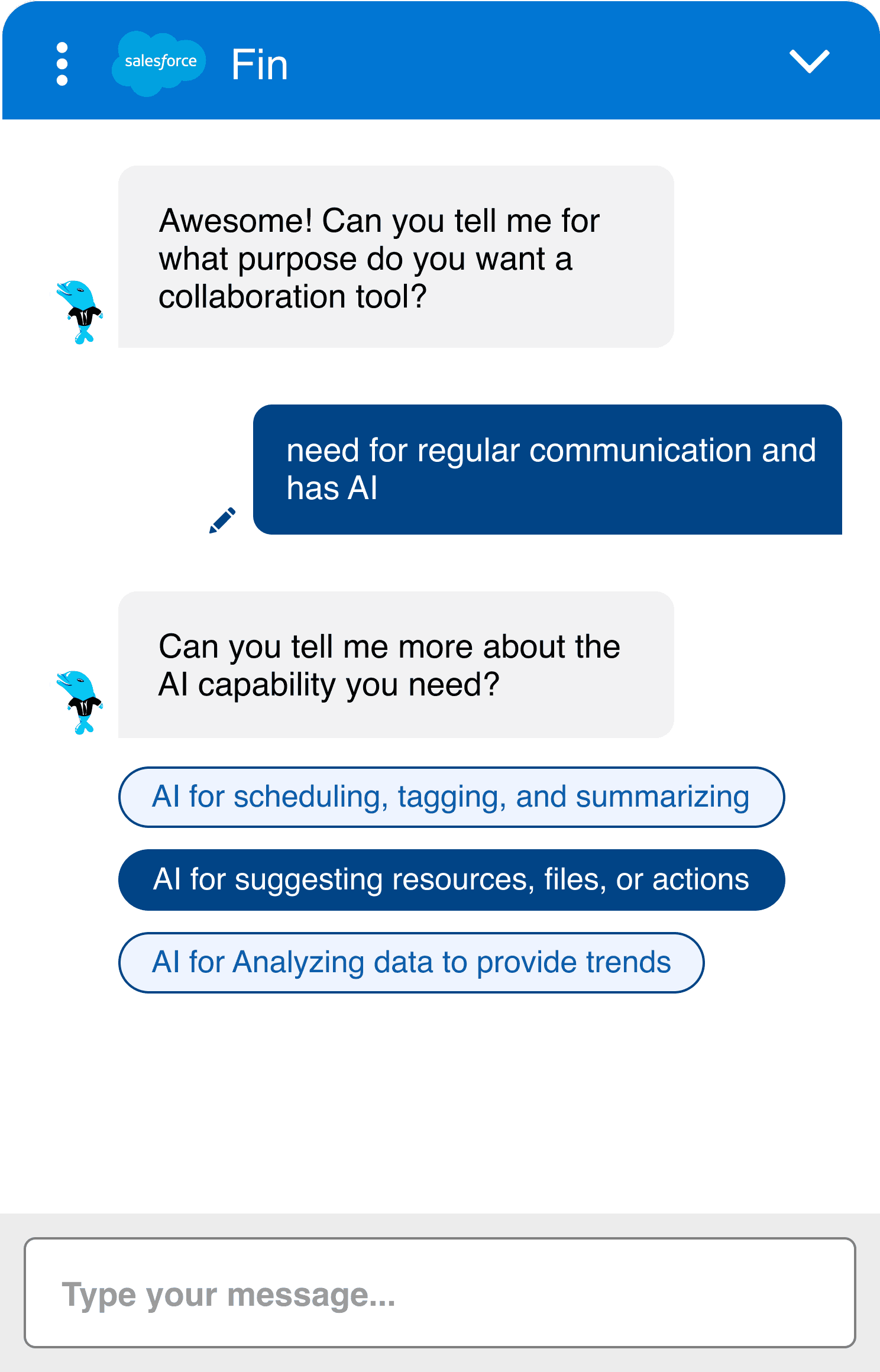
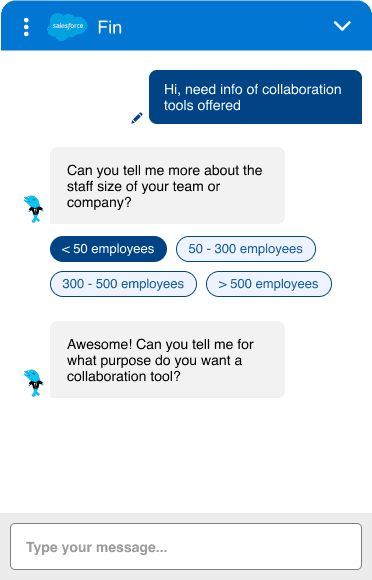
Users gave vague inputs because they didn't know how to ask better. Instead of a form (which we prototyped and killed, it immediately broke the conversational feel), Fin asks natural follow-up questions mid-conversation with quick-select chips. Vague entries become accurate recommendations.
Key insights that informed design decisions
Users expect the chatbot to provide accurate, relevant responses and inform them its capabilities.
How might we..
Design the chatbot to prompt users for clarification or elaboration?
Ensure they feel confident it will understand detailed responses?



Suggestive prompts
After three rephrasings, Fin surfaces contextual prompt suggestions. Not after one backspace but after three, which is the threshold where hesitation becomes a signal.
What does this address?
Struggle to structure potential questions to the chatbot, keep refining clarifying questions / follow-ups
Not every user is a prompt engineer, the clarifying questions help users when they don't know what and how to ask. This in turn helps build user trust and reliance in the chatbot.


Outcomes
Chatbot personality grounded in research-backed tone, designed to sustain engagement with first-time users
Product discovery flow that lets users make confident decisions without a sales call
Five research-identified pain points directly addressed through behavioral triggers and navigation design
Two pain points (backend reliability, privacy timing) deliberately scoped out, we focused where our work could move the needle
Reflections
To improve team collaboration in research process, we broke into two sub-groups which improved efficiency in a nine-member team.
Weekly feedback sessions with the Salesforce team helped us get real-time feedback and a sense of stakeholder expectation
We gradually learned the balance in assisting users while allowing them the autonomy to independently explore the chatbot.
This project provided valuable insights into designing AI-driven conversational interfaces while maintaining a human-centered approach, ensuring that AI solutions remain intuitive, adaptive, and user-friendly.